
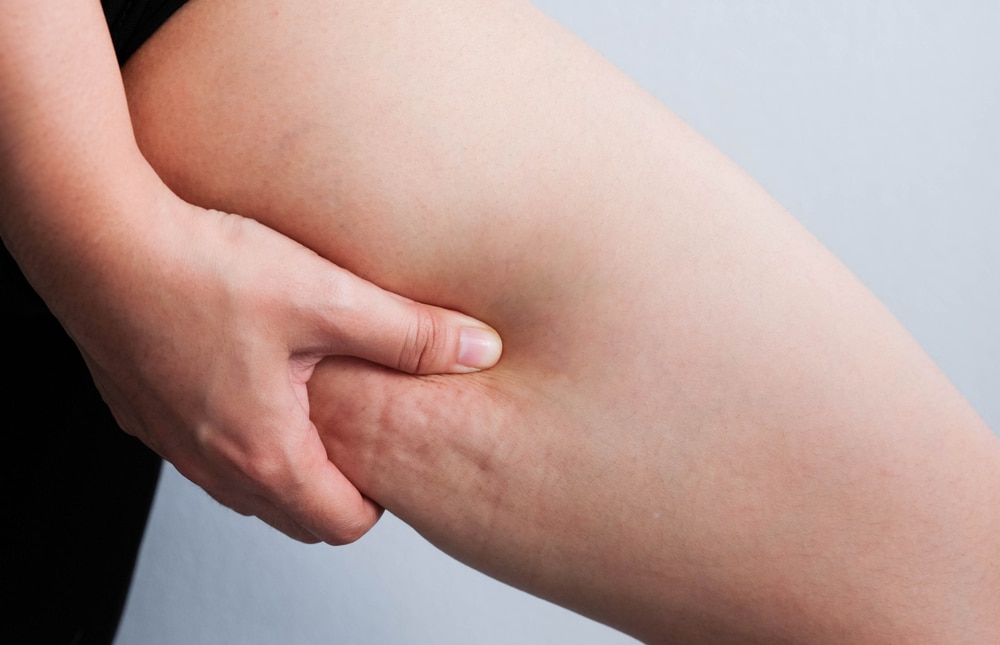
Cellulite develops through interactions among fibrous bands, fat beneath the skin, and other biological factors. Dimples often form when septa pull the skin downward while surrounding tissue rises. Since these structural bands sit below the surface, diet, exercise, creams, and massage usually can’t address the underlying cause. Avéli™ cellulite treatment works differently and targets the septa responsible for individual depressions.
Based in Boca Raton, FL, Dr. Giancarlo McEvenue is certified by the American Board of Plastic Surgery and the Royal College of Physicians and Surgeons of Canada. He provides cosmetic procedures for the face, breasts, and body, including minimally invasive cellulite treatment.
What’s Happening Beneath the Skin?
Your skin is connected to deeper tissue by fibrous bands called septa. In areas affected by cellulite, some of these bands pull the skin inward. The tissue between them pushes toward the surface, producing the familiar dimpled or uneven appearance.
Cellulite commonly appears on the thighs and buttocks. It isn’t an illness, and it doesn’t mean you’re unhealthy. Your connective tissue structure, hormones, genetics, skin thickness, age, and fat distribution can all play a role in how noticeable it becomes.
Is Cellulite Caused by Excess Fat?
Cellulite and excess fat aren’t the same thing. People at many body weights can have cellulite, including those who work out regularly and have little excess body fat.
Weight changes can affect how visible the depressions are, but losing weight won’t necessarily release the bands pulling underneath your skin. Liposuction removes localized fat rather than addressing the septa responsible for dimples, so it isn’t designed as a solution for cellulite.
Why Don’t Creams and Exercise Get Rid of It?
Exercise can strengthen your muscles and support healthy body composition; creams may moisturize the skin or make its surface appear smoother; and massage may initially reduce the appearance of unevenness. These options don’t directly address each tethered dimple and permanently release the underlying septa, which is why results can be subtle or temporary.
How Does Avéli Treat Cellulite?
Avéli is a minimally invasive procedure FDA-cleared for the long-term reduction of cellulite on the buttocks and thighs of adult women. During treatment, Dr. Giancarlo uses a specialized handheld device under the skin to confirm and release the septa connected to each targeted depression.
This service is performed with local anesthesia and typically takes about an hour. Mild pain, bruising, and tenderness can occur afterward, and temporary swelling is also possible. Some people return to normal activities within a day, although recovery varies and strenuous activity may need to be postponed.
Learn Whether Your Dimples Can Be Treated
Not every type of skin unevenness comes from fibrous bands, so an in-person assessment helps determine whether Avéli fits your concerns. To discuss cellulite treatment with Dr. Giancarlo McEvenue in Boca Raton, FL, contact us at 561-524-9672.